
If you live in an older home and/or you’re planning renovations, it is wise to consider the potential for asbestos exposure in your home. Removing asbestos from the home can be an arduous process.
The first step to removing this potentially dangerous material from your home is to properly identify it. Asbestos can persist in a variety of areas within your home including acoustic ceiling spray, floor tiles, linoleums, insulations, drywall/joint compounds, exterior stuccos, roofing, etc. Thus, it is very important to have testing performed prior to initiating the demolition or renovation process in your home. By contacting professionals, you can ensure that your home and your family is safe from asbestos exposure before, during, and after your renovation.
Testing Methods
There are various ways to test for asbestos in the home. Do not attempt to identify asbestos in your home by yourself. Improperly collecting samples can lead to further disruption and distribution of the asbestos into your home.
The first step you should take is to contact an asbestos specialist to come inspect your home and identify areas where asbestos may be present. An asbestos professional will be able to extract a sample, place it in an appropriate container, and send it away for testing.
Air Samples
For airborne asbestos, Phase Contract Microscopy (PCM) is widely used to measure fiber concentrations that can indicate that asbestos is present in air samples. This method is very useful because it takes less time and has a lower cost than other methods. PCM does not positively identify asbestos fibers. Instead, it gives an overall gauge of the various types of fibers presenting in a particular air sample.
If the fibers are too small to identify using PCM, then Transmission Electron Microscopy (TEM) is used. This method is the most sophisticated method available for identifying airborne asbestos materials and is now the standard practice for most asbestos-related air samples as it allows researchers to identify extremely small particles in the air.
Building Material Samples
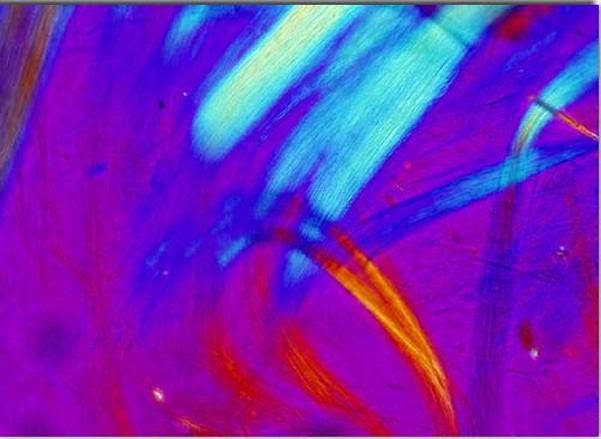
To test building materials for asbestos, different methods are employed. Polarized Light Microscopy (PLM) is the most frequently used technique for this category of materials. This technique uses the unique properties of polarized light to analyze mineral-specific properties in fibers, allowing researchers to identify asbestos particles as well as the various species of asbestos particles that exist. PLM tests show the percentage of asbestos within a certain material after analysis.
Soil and Water Testing
Soil testing is particularly useful for environmental investigations into whether or not illegal dumping of asbestos-ridden materials has occurred. Typically, soil tests are analyzed using PLM but can also be done using TEM. Water samples are typically analyzed using TEM methods.
If you have reason to believe that there may be asbestos in or around your home, locate a professional residential asbestos testing firm. You can contact SanAir Technologies laboratory with any questions. We provide sample testing and analysis for professional firms, and make use of advanced asbestos testing methods such as PCM, TEM and PLM that provide accurate results. You can contact us by dialing (804) 897-1177.
